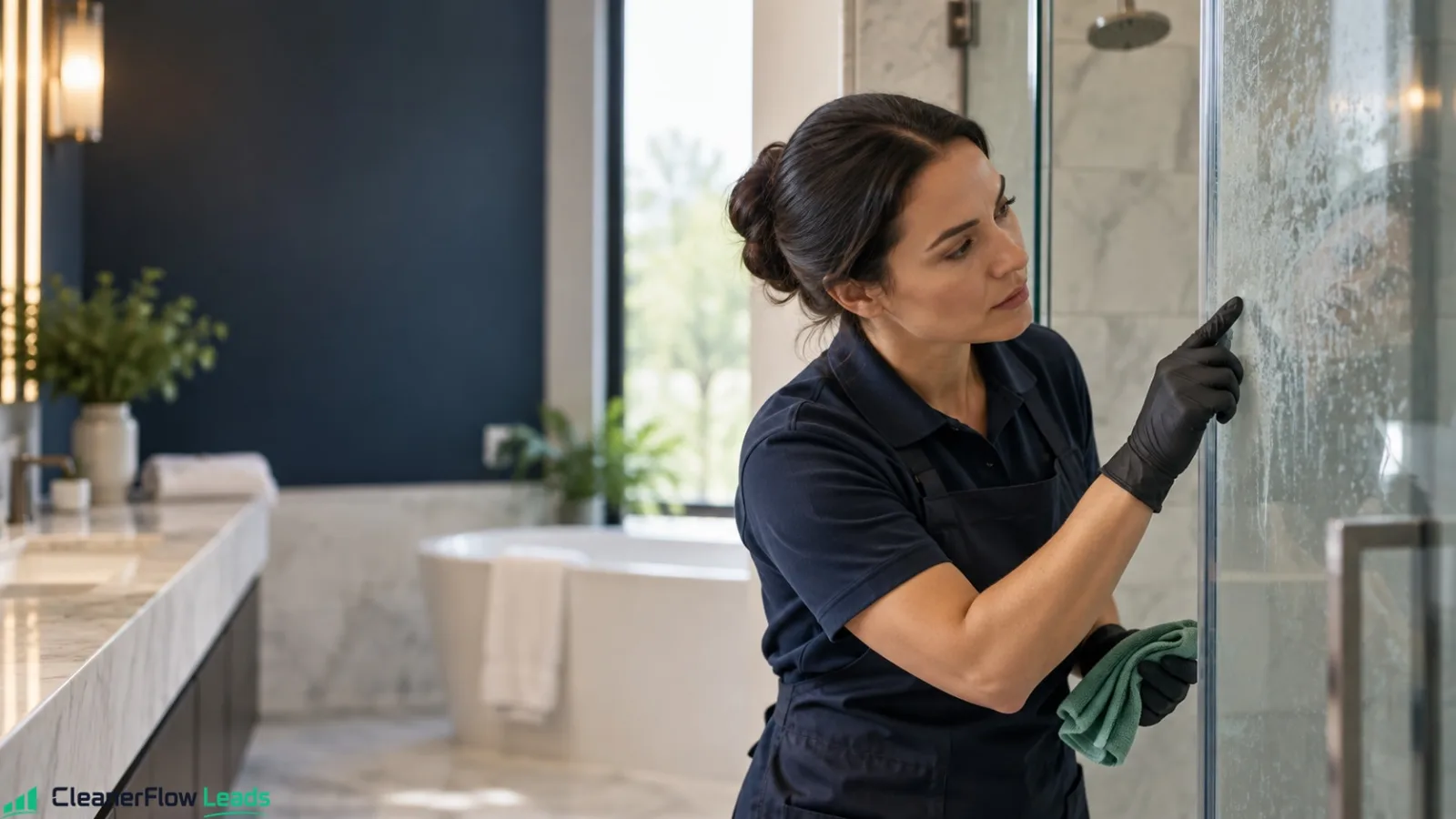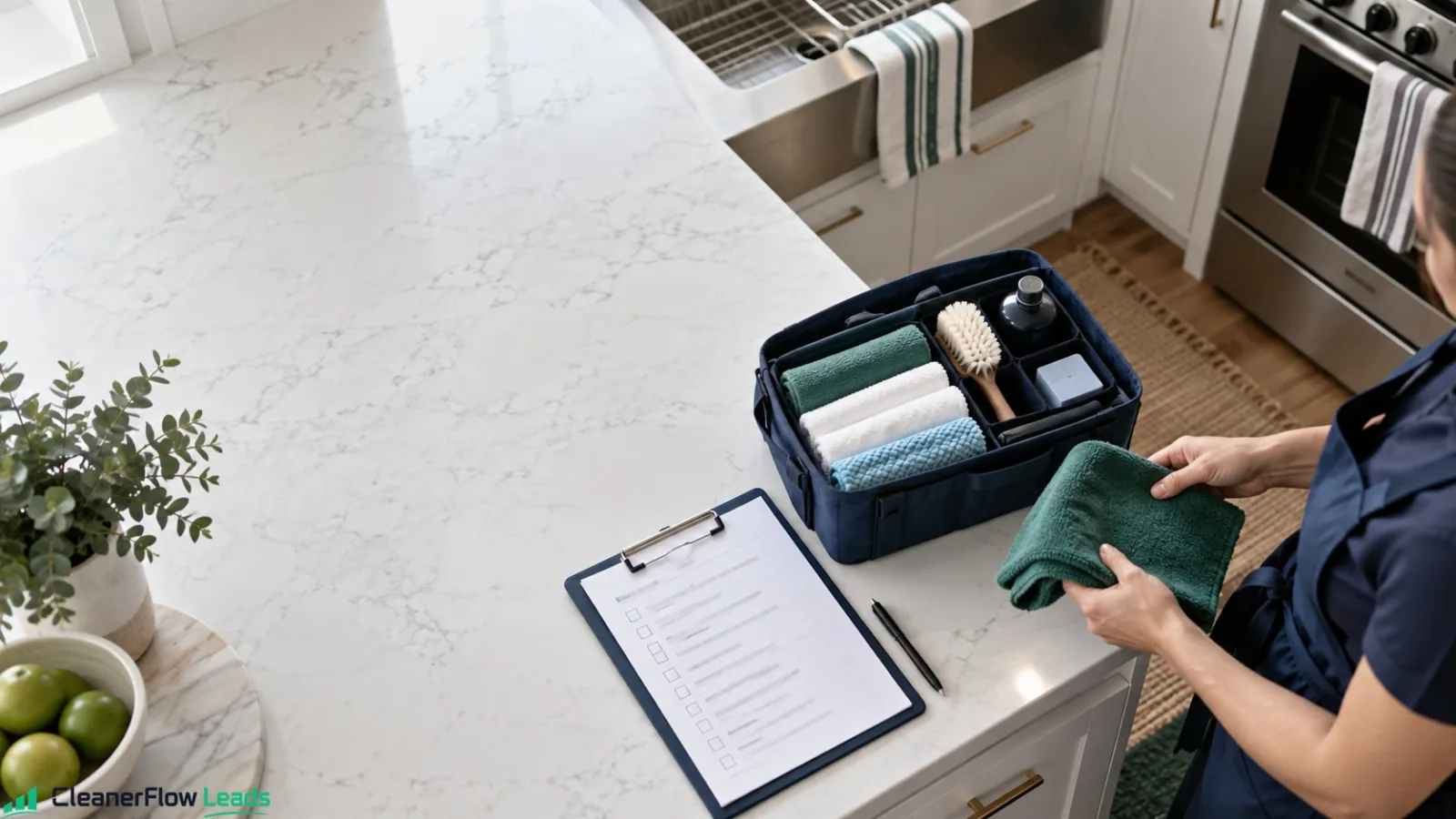
When you decide to hire help with the cleaning, you quickly run into a fork in the road: do you hire a cleaning company, or an independent house cleaner who works for themselves? Both can do excellent work, and neither is "the right answer" for everyone. The best choice depends on what you value most — price, backup, a personal relationship, or formal protection. This is a balanced, honest guide to the real differences, what each option costs, and the questions to ask before you let anyone into your home.
What a cleaning company is
A cleaning company is a business with several cleaners on staff. You book with the company, the company assigns someone (or a small team), and the company handles scheduling, training, insurance, and payment. You're hiring the business, not one specific person.
That structure is the whole point. The company stands between you and the individual doing the work, which means it absorbs the day-to-day problems — a sick worker, a scheduling conflict, a complaint — so you don't have to.
What an independent cleaner is
An independent cleaner is a self-employed professional you hire directly. You communicate with them, pay them, and build a relationship one-on-one. The same person cleans your home each time, and you're hiring that individual.
Both are legitimate, professional ways to keep your home clean. It helps to keep that framing in mind: you're not choosing between "good" and "bad," you're choosing between two ways of organizing the same work, each with its own strengths.
The price difference
This is usually the first thing people notice. Independent cleaners generally charge about 15–25% less than a cleaning company for comparable work (Care.com). In hourly terms, independents commonly run around $30–$45 per hour, while companies more often land around $45–$75 per cleaner per hour (HouseCall Pro).
Keep in mind that the gap is a general pattern, not a rule. A highly experienced independent in a busy city may charge as much as a company, and a budget company may undercut some independents. Price alone shouldn't decide it — but it's a fair starting point. (If you want a number for your own home, you can estimate your cost in a minute.)
Why companies cost more
The reason is simple and not a trick: a company carries overhead an individual doesn't — payroll, insurance premiums, training, scheduling staff, marketing, and management. Those costs are real, and they're built into the price. An independent cleaner has far less of that to cover, so they can charge less for the same hours.
Neither price is "wrong" — you're paying for different things. With a company, part of what you pay covers the backup, the insurance, and the management you never see; with an independent, more of every dollar goes to the cleaning itself.
Company: the advantages
- Backup if someone's out. If your assigned cleaner is sick or on vacation, a company can send someone else, so your schedule rarely breaks (Angi).
- Insurance and bonding are built in. A reputable company typically carries liability insurance and a bond, and covers its workers — so if something is damaged or a worker is hurt in your home, the company's coverage handles it rather than you (Angi).
- Standardized quality. Companies often work from checklists and run quality checks, so the result aims to be the same every visit.
- Less to manage. Vetting, scheduling, and payment are handled for you.
Company: the trade-offs
- You pay more for that overhead and convenience.
- It can feel less personal, because you're a client of the business rather than in a relationship with one person.
- Rotating staff. You may not get the same cleaner each time, which some people don't mind and others dislike.
- Less room to customize. A company's checklist is built for many homes; small personal requests can get lost between the office and the person who shows up.
Independent cleaner: the advantages
- Lower price, as covered above — often 15–25% less.
- The same person every visit, who learns your home, your preferences, and the spots that matter to you.
- A personal relationship and direct communication — easy to ask for a tweak or reschedule.
- Flexibility, since you're arranging things one-on-one rather than through a company's system.
Independent cleaner: the trade-offs
- No built-in backup. If your cleaner is sick or away, there may be no one to cover, and your clean gets postponed (Care.com).
- You must verify insurance yourself. Many independent cleaners are excellent and fully covered — but not all carry liability insurance or a bond, so it's on you to ask and confirm rather than assume (Insurance.com).
- More on you to manage, from vetting to scheduling to handling payment.
A quick side-by-side
- Price: independent is usually lower; company is usually higher.
- Backup if someone's out: company yes; independent often no.
- Insurance and bonding: company usually built in; independent you must verify.
- Same person each time: independent yes; company not guaranteed.
- Personal relationship: independent strong; company more transactional.
- Convenience of managing it: company higher; independent more hands-on.
Neither column is "better" — it's about which of these matters most to you.
Would you rather have someone else do this one?
Get up to 3 local cleaners →The four questions to ask either way
Whether you go with a company or an individual, ask the same things before you book:
- Are you insured and bonded? Ask plainly and request proof.
- Can you share references or reviews? Real clients you can check are the best signal of reliability.
- What's the exact scope? Get in writing what's included and what costs extra (inside the oven, interior windows, laundry), so the price you're quoted is the price you pay.
- Who supplies the products and equipment? Most bring their own; if you need specific products for allergies or delicate surfaces, say so up front.
A good answer to all four — clear, calm, and in writing — matters far more than whether the name on the invoice is a company or a person.
How to check insurance and bonding
A professional expects the insurance question and answers it calmly (Insurance.com). Ask to see the certificate or policy document, and check that the name on it matches the business or person you're hiring. If you ever doubt the paperwork, you can call the insurer or bonding provider directly to confirm it's active.
With a company, you're checking the business's policies; with an independent, you're checking one person's. Either way, a professional who values your trust will welcome the question, not dodge it.
How to vet an independent cleaner safely
Because an independent doesn't come with a company's vetting behind them, do a little of your own. Confirm their insurance and, ideally, bonding. Check at least two references or a set of genuine reviews. Get the scope and price in writing before the first visit. And trust your read of the conversation — a professional communicates clearly and isn't bothered by fair questions.
How to evaluate a cleaning company
A company needs checking too, just in different places. Ask who will actually come to your home and whether you can request the same person or team each time. Ask how they train new staff and how they handle a complaint — who you call, and what they do if a room was missed. Read reviews for patterns rather than single stories: repeated mentions of no-shows or rotating crews tell you more than one angry post.
Start with a single clean
Whichever route you take, start with one visit before committing to a recurring schedule. A single clean lets you see the work, check how they communicate, and notice whether the details you asked for were handled. If it goes well, you move to a recurring plan with confidence. If it doesn't, you've lost one visit instead of a season.
What happens if something gets broken
This is the question people think about and rarely ask out loud, and it is the clearest practical difference between the two options.
With a company, there is usually a policy and a process. A larger operation carries liability insurance, has handled breakages before, and has somebody whose job it is to answer you. You are less likely to end up in an awkward personal negotiation, and more likely to get a scripted outcome — which cuts both ways, because a policy can also say no.
With an independent cleaner, it depends entirely on the person and on whether they carry insurance. Plenty do. Plenty do not, especially early on. If they do not, a broken item becomes a conversation between two people, and the result depends on goodwill rather than paperwork.
None of this makes independents riskier as people. It makes the question worth asking directly, once, before the first visit: "Do you carry insurance, and what do you normally do if something gets damaged?" A good answer sounds like an answer, not like offense. Professionals who have been doing this a while will tell you plainly how they handle it — and that tells you more than any review.
What you can do on your side
Two things, whichever you choose. Put genuinely irreplaceable things away rather than relying on care — not because anyone is careless, but because no amount of money fixes the one item that cannot be replaced. And check your own home insurance, which in many cases covers accidental damage inside the home regardless of who caused it.
Asking early costs nothing. Discovering the answer after something breaks costs the relationship.
Common mistakes when choosing
- Choosing on price alone. The cheapest quote with no insurance and a vague scope can end up the most expensive.
- Assuming a company means insured. It usually does, but ask for proof anyway.
- Skipping the written scope. Most disagreements come from different ideas of what "clean" included.
- Committing to recurring service before a first visit. One clean first, then decide.
Who each option is best for
A company tends to suit you if you want hands-off convenience, never want a gap in service, and prefer the peace of mind of formal insurance and backup built in — and you're comfortable paying somewhat more for that.
An independent cleaner tends to suit you if price matters, you value the same trusted person each visit and a real relationship, and you're willing to do a bit of vetting yourself.
The bottom line
There's no universal winner. A company costs more but brings backup, insurance, and standardized quality; an independent costs less and brings a personal, consistent relationship that you vet yourself. Many homeowners land somewhere in between — and the easiest way to decide is to compare. Ask every candidate the same four questions and choose the professional you trust, not just the cheapest or the biggest name.
When you're ready, request a cleaning: describe your home once and compare vetted local pros side by side in a couple of minutes.
Sources
Luciano Rezende · Founder, CleanerFlow
Luciano founded CleanerFlow after years building tools for residential cleaning professionals. He writes about the economics of getting clients, pricing jobs, and running a cleaning business that lasts.
Three trusted local cleaners — without the flood of spam calls.
Tell us what you need once. We share it with up to three qualified local pros, whoever takes it reaches out, and you pick from those who do.
- Up to 3 pros
- No account, no spam
- Stop any time