Hiring a house cleaner should make your life easier, not add a chore to your week. But a little preparation before the visit makes a real difference — it helps the cleaner do a better job, protects your belongings, and makes sure you get the most for what you're paying. The good news is that "preparing" does not mean cleaning. In fact, the biggest mistake people make is scrubbing the house before the cleaner arrives. Here's exactly what to do, what to skip, and why a few minutes up front pays off.
Tidying is your job — cleaning is theirs
This is the single most important idea, so let's be clear about it. A professional cleaner is there to clean: to wipe, scrub, sanitize, dust, and mop. They are not there to put away your things. As Molly Maid puts it, "While it's important to declutter your home before we arrive, there's no need to spend any time cleaning" (Molly Maid).
Why does this matter to your wallet? Because if your cleaner has to move toys off the floor, clear dishes from the sink, and pick clothes off the bed before they can even start, you are paying cleaning rates for tidying work. Spending about 15 minutes clearing clutter yourself can save your cleaner 30 to 45 minutes of picking up — time that then goes into actual cleaning instead (Care.com). A clear surface gets cleaned; a cluttered one gets cleaned around.
A quick pre-tidy checklist
A pre-tidy is short and simple. Walk through the house once and:
- Clear countertops, tables, dressers, and desks of loose items.
- Put dishes away or stack them neatly to one side.
- Pick clothing, toys, and bags up off floors and beds.
- Set out fresh sheets if you'd like the beds changed.
- Empty the most overflowing trash cans if they are hard to reach.
That's it. You're not cleaning — you're clearing the runway. If you only have a few minutes, start with the kitchen counters and the bathroom sink, because those are the surfaces a cleaner spends the most effort on and where clutter gets in the way most.
Secure valuables and important documents
Most professional cleaners are honest, and the better companies are insured and bonded. Even so, it's simply good sense to put away anything valuable, irreplaceable, or private before someone you've just met spends a few hours in your home. This protects everyone: it removes any chance of a misunderstanding, and it keeps fragile or sentimental items out of harm's way (Angi).
Take a couple of minutes to:
- Tuck away cash, jewelry, and credit cards in a drawer or safe.
- File or put away important documents and mail.
- Move any fragile or sentimental pieces somewhere they won't be bumped while surfaces are cleaned.
This isn't about distrust — it's the same habit you'd follow for any service visit, and it lets you relax instead of hovering. It also spares the cleaner the worry of working around things they're afraid to touch, which slows them down.
Plan for pets
A home with pets running around is harder and slower to clean, and a stranger with a vacuum can be stressful for your animals. Before the visit, decide where your pets will be. A closed room, a crate, a yard, or a walk with a family member all work; the goal is to keep them safe and out from underfoot (Molly Maid).
Let your cleaner know in advance if you have pets, in case of allergies, and point out where they are so no one is surprised by an open door. If a pet is kept in a room, tell the cleaner whether that room should be skipped or cleaned once the animal is moved.
Plan for kids
Kids are the same idea. If you can, plan the cleaning for when they're at school or out. If they'll be home, set them up in a room that's already been done so they're not crossing wet floors or following the vacuum around. A short heads-up to the kids — "someone is coming to help clean, so we'll stay in the living room for a bit" — avoids surprises for everyone.
Clear the way in
Nothing wastes a visit faster than a cleaner standing at a locked door or circling the block for parking. Sort out access before the day:
- Tell them where to park, especially if your street has permits or tight spots.
- Arrange entry — a key, a lockbox, a door code, or simply being home to let them in.
- If you have an alarm, give them the code or disarm it, and mention any cameras or smart locks (Angi).
A minute of planning here means the whole appointment starts on time and runs smoothly.
Tell them what matters most
Your cleaner can't read your mind, and your idea of "clean" might differ from theirs. A short, clear conversation up front gets you exactly what you want. Tell them your priorities — the rooms that matter most, the spots that always bother you, and anything you'd rather they skip (Angi).
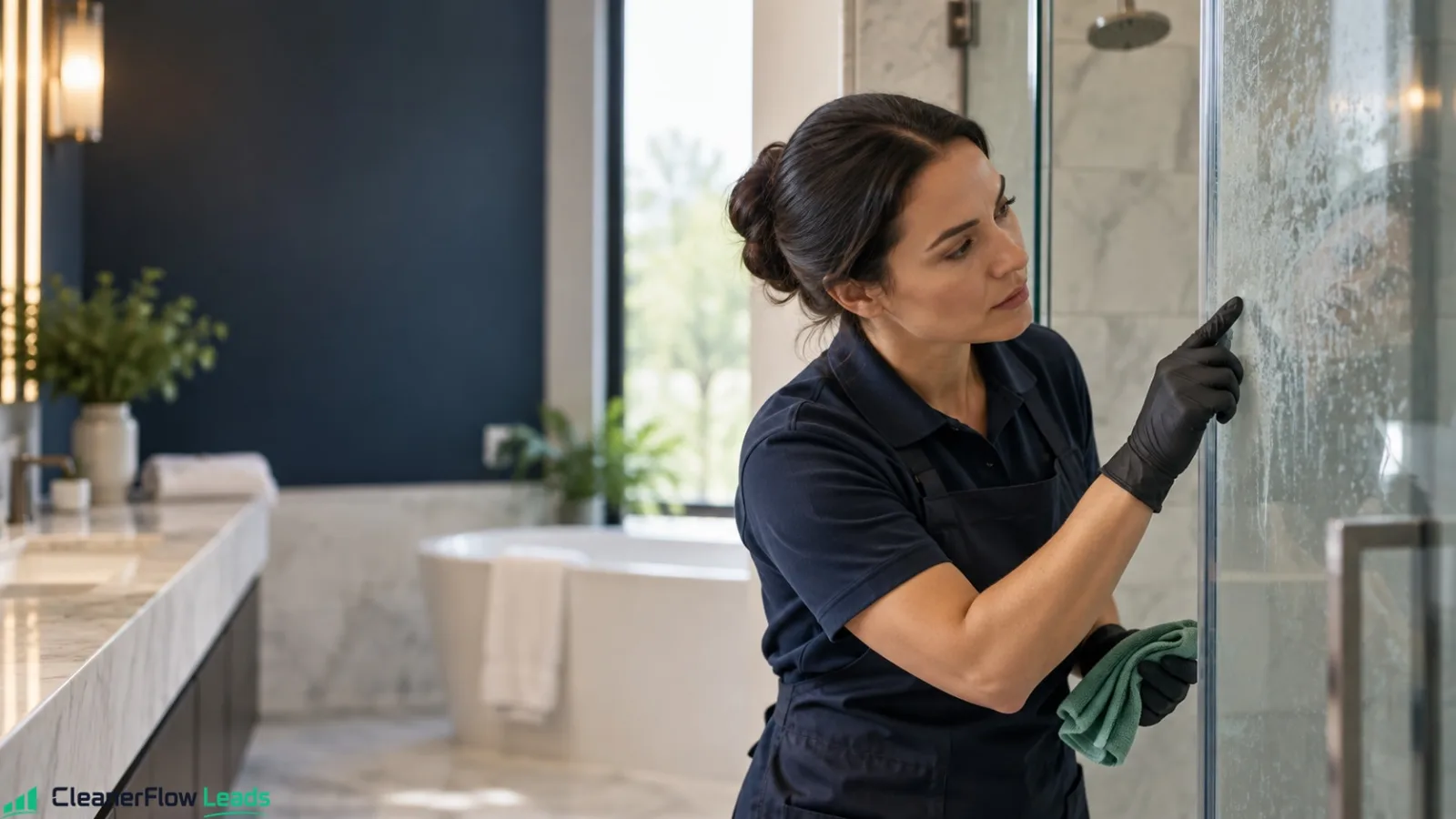
Be specific about problem areas — the grimy oven, hard-water spots on the glass, the dusty blinds — and about which rooms to focus on. Mention any rooms or items that are off-limits, too. The clearer the list, the less guesswork.
Products, surfaces, and allergies
Would you rather have someone else do this one?
Get up to 3 local cleaners →If anyone in the home has allergies, or you have delicate countertops, hardwood, or stone, say which products you want used (or avoided), and set yours out if you'd prefer they use them (The Maids).
Most cleaners bring their own supplies and equipment, so if you have a preference, the time to mention it is when you book — not mid-visit. That gives the cleaner a chance to bring the right products instead of improvising.
Do a quick walkthrough on the first visit
For the first appointment especially, it's worth being home to give a short tour. Walk through the space together, point out those problem areas, explain any quirks (the faucet that sticks, the room you keep closed), and confirm what's included. This gets everyone on the same page and sets the standard for every visit after (The Maids). It's far easier to align expectations in person on day one than to fix disappointment afterward.
What to settle on day one
A few things are worth covering on that first walk-through: how long the visit usually takes, whether you'll be home or out for future cleanings, and how you'd like to handle feedback if something gets missed. Settling the small stuff early means later visits run on autopilot, with no awkward conversations.
Not sure what a clean should run for a home your size? You can estimate your cost in a minute before you book, so you walk in knowing what's fair.
Agree the scope in writing
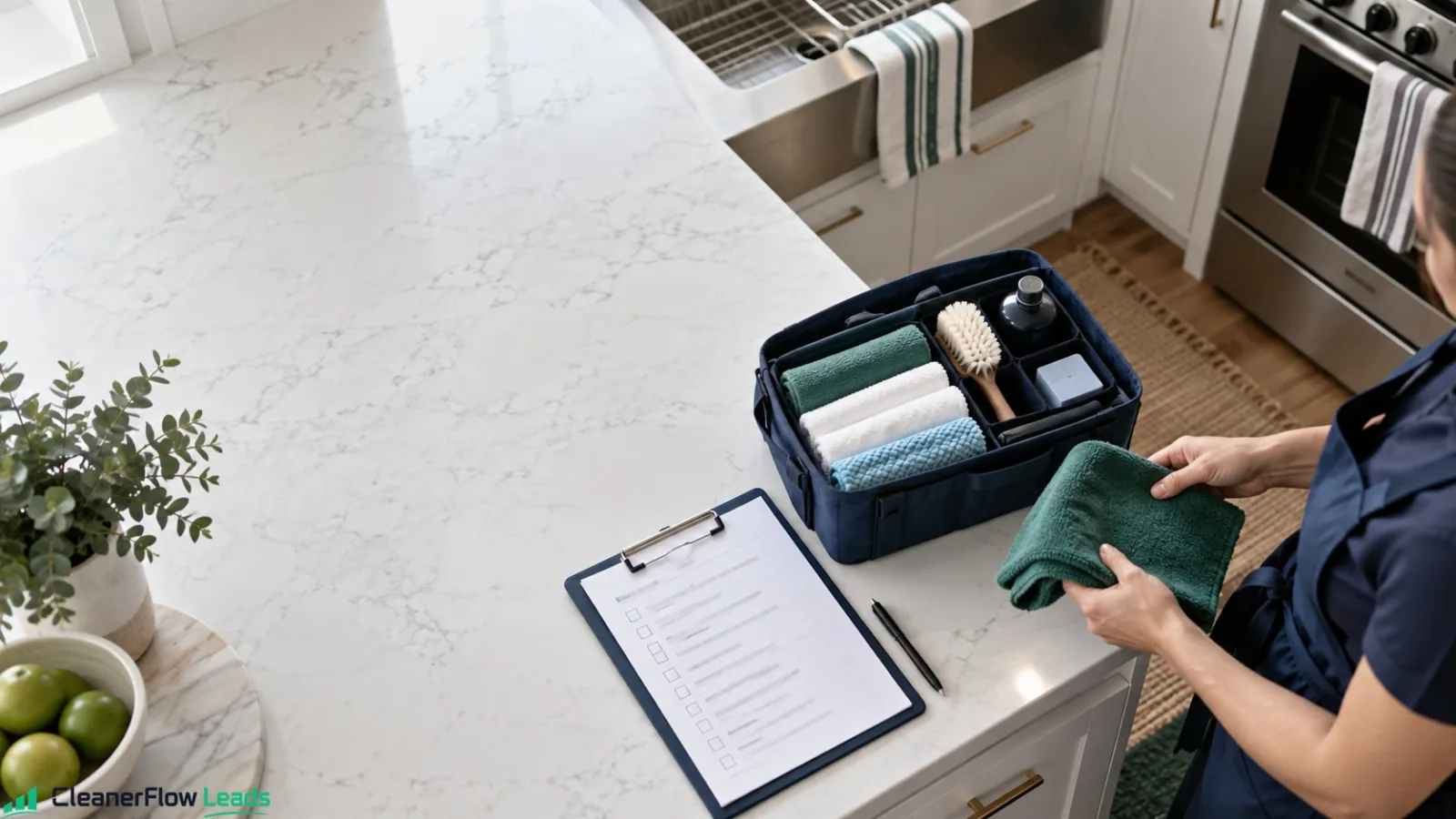
A friendly chat is great, but memory fades and people change. Put the agreement in writing — even a simple checklist or message thread counts. Note which rooms get cleaned every visit, which are occasional, what's included versus an add-on, the price, and how often you'll meet (HouseCall Pro). A clear written scope protects both of you: you know what you're paying for, and your cleaner knows exactly what's expected. It's the single best way to avoid an awkward "but I thought that was included" later.
What NOT to do
The mistake worth repeating: don't deep-clean before the cleaner comes. It's tempting to "make it presentable," but scrubbing the bathroom the night before just means you've done — and paid for — the work twice. Trust the professional to do what they're there to do.
A few other things to skip:
- Don't hide so much clutter into closets and drawers that you forget where it went.
- Don't leave a sink full of dishes or a floor covered in toys and expect a spotless result around them.
- Don't stay silent about a problem area and then feel let down it wasn't touched — say it up front.
If you'll be home during the clean
Plenty of people are, and it is completely normal. It just works better with a little planning, because two people moving through the same rooms is the main thing that slows a clean down.
Decide on a route, not a rule. The simplest arrangement is to work in the opposite direction: if the cleaner starts upstairs, you settle downstairs, and you swap at the halfway point. One sentence at the door sorts it — "I'll be in the office at the back, I'll move when you need that room."
Expect noise, and plan the calls. A vacuum is loud and a bathroom fan is louder. If you have meetings, say at the start which hour matters and the cleaner will almost always rearrange the order to match. Asked in advance, it is easy. Asked mid-vacuum, it is awkward.
Give the cleaner room to work
Do not hover, and do not apologize for existing. Both are common and both make the day harder. Following someone from room to room makes careful work slower and makes most people self-conscious. Being in your own home is not an intrusion; standing behind somebody while they scrub is.
Say the important thing once, at the start. If there is one room that matters most today, or something that must not be moved, that is the moment. Requests that arrive in pieces throughout the visit cost far more time than the same requests delivered at the door.
Offer water, skip the conversation. Most people working want to be treated kindly and left to concentrate. A short friendly hello and then genuinely letting them work is, in practice, the most respectful thing you can do.
End with a short walk-through
At the end, take a couple of minutes to walk through together. It is easier to mention a missed corner while someone is still standing in the hallway than to write about it that evening. Keep it specific and calm — "the shower glass still has spots" is useful; "it doesn't feel clean" is hard to act on. Good cleaners welcome this kind of feedback because it helps them get your home right on every visit.
Should I clean before the cleaner comes?
No. Tidy, don't clean. Clearing surfaces helps; scrubbing, mopping, or wiping before the visit means paying for the same work twice. The cleaner needs clear access to surfaces, not surfaces that are already clean.
Do I need to be home during the cleaning?
Not usually. Many people are home for the first visit to do the walkthrough and then leave access arranged for later visits. What matters is that entry, alarm, and pets are sorted in advance, and that you are reachable by phone in case the cleaner has a question.
Should I provide cleaning supplies?
Only if you have a reason to. Most professionals bring their own products and equipment. If you want specific products used — because of allergies, delicate surfaces, or simple preference — set them out and say so when you book.
The bottom line
Preparing for a house cleaner takes a short tidy and a few decisions, and it pays you back every visit. Tidy (don't clean), secure your valuables, plan for pets and kids, clear the way in, share your priorities, and put the scope in writing. Do that and your cleaner can pour their time into the work that actually makes your home shine — which is exactly what you're paying for. When you're ready, request a cleaning and get matched with vetted local pros.
Sources
Luciano Rezende · Founder, CleanerFlow
Luciano founded CleanerFlow after years building tools for residential cleaning professionals. He writes about the economics of getting clients, pricing jobs, and running a cleaning business that lasts.
Three trusted local cleaners — without the flood of spam calls.
Tell us what you need once. We share it with up to three qualified local pros, whoever takes it reaches out, and you pick from those who do.
- Up to 3 pros
- No account, no spam
- Stop any time