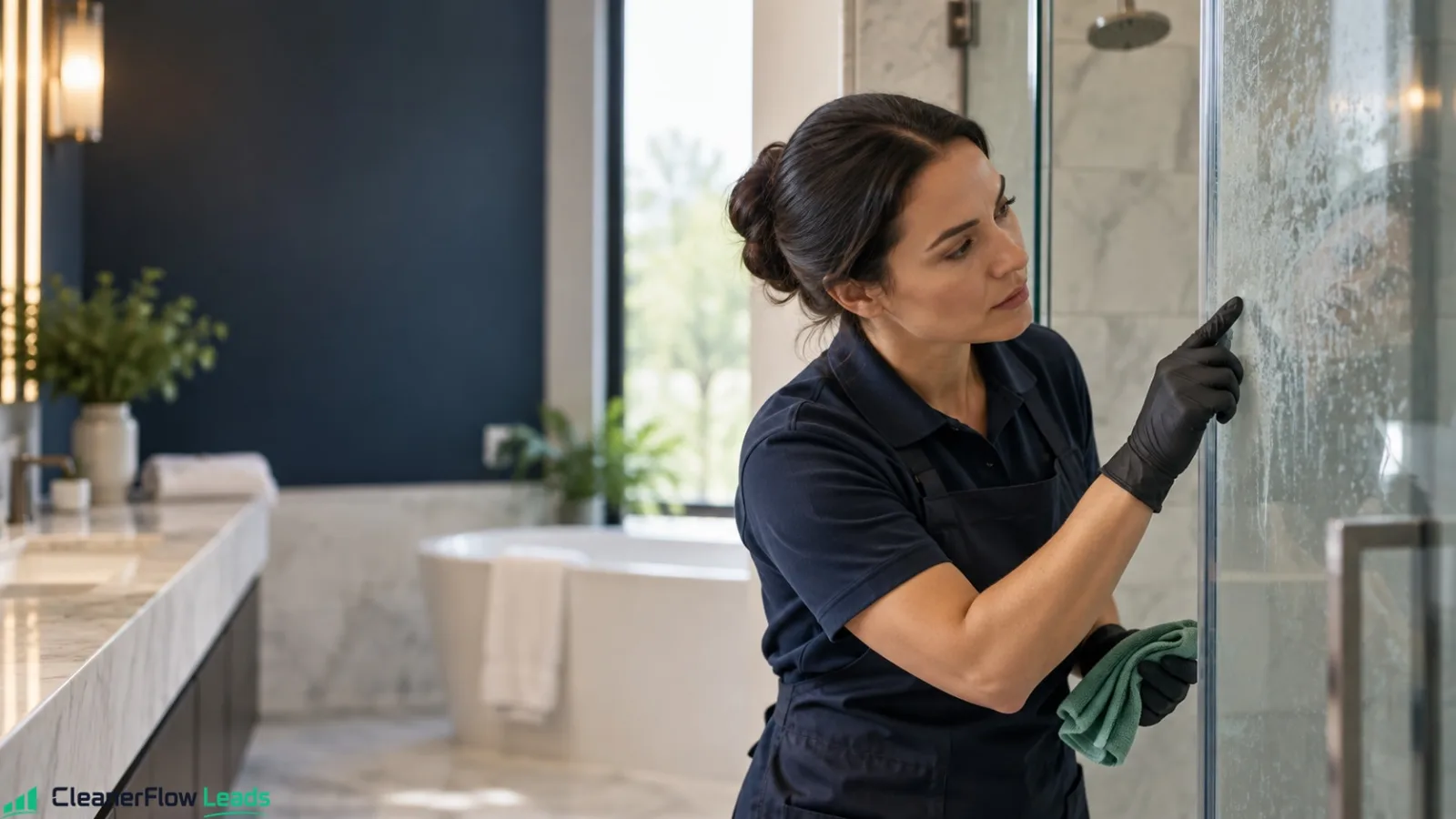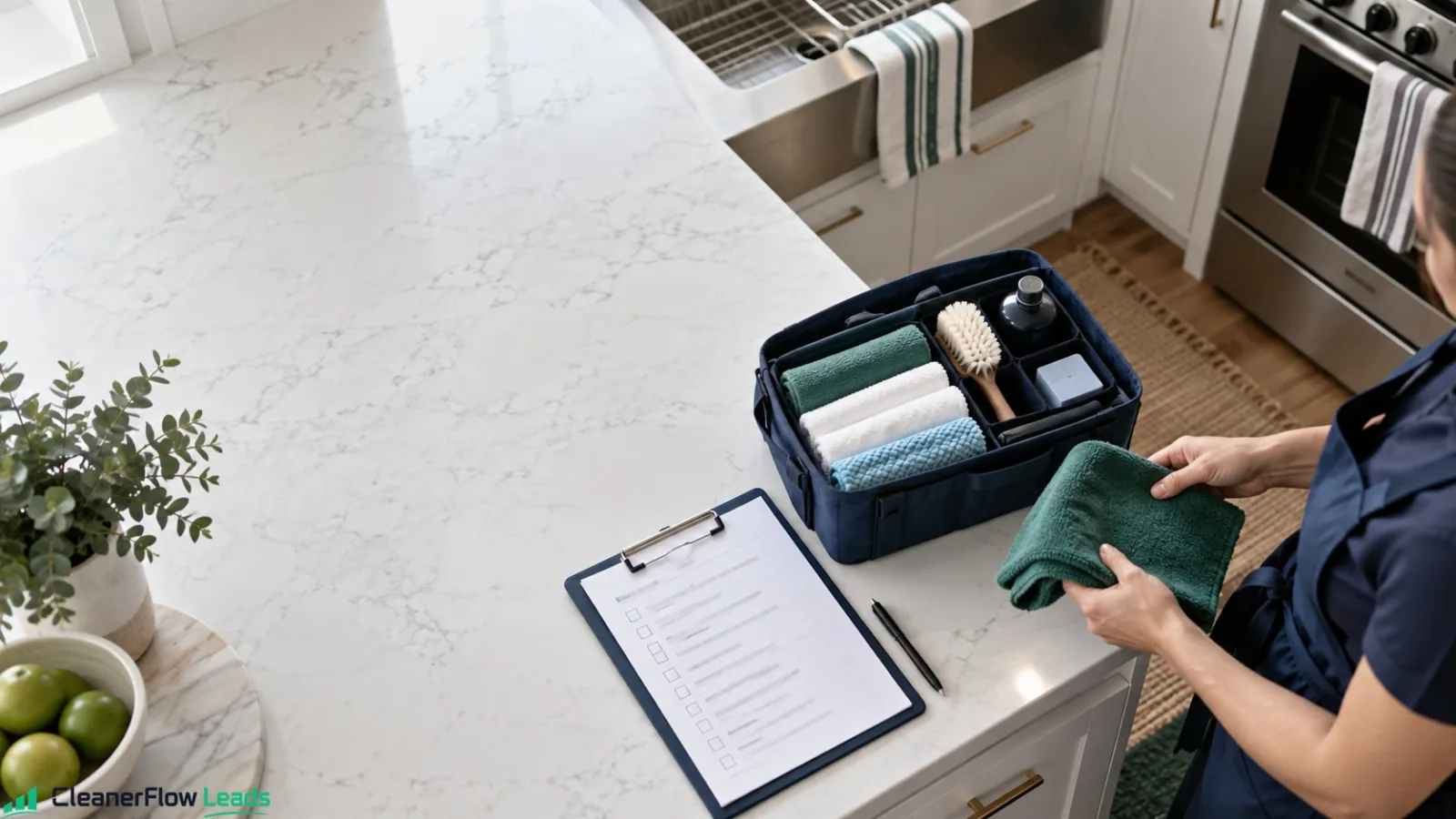
If you're thinking about hiring a house cleaner, the first question is always the same: what's this going to cost me? The honest answer is "it depends" — but it depends on a small number of things you can actually understand. Here's a clear, no-surprises guide to what house cleaning costs in 2026, what moves the price up or down, and how to get a number you can trust for your own home. We'll keep it practical: real 2026 price ranges, what pushes them higher or lower, and the exact questions to ask before you let anyone in.
The short answer
For a standard cleaning of an average home, most people pay roughly $120 to $280 per visit, with the typical job landing around $175 (HomeGuide). Priced by the hour, cleaners generally charge $35 to $75 per cleaner per hour (HouseCall Pro). A smaller apartment can come in well under that range; a large home, or one that hasn't been cleaned in a while, can run above it. Those are starting points — your real number depends on the factors below.
What you're really paying for
A cleaning price isn't just the hours spent in your home. It also covers the products and equipment the cleaner brings, the drive to your address and back, the time spent scheduling and quoting, and the costs of running a legitimate business, such as insurance where the cleaner carries it. Knowing this makes the number easier to read: a fair price has to cover all of it, which is why a quote that seems to pay only for the hours inside your home is usually missing something.
What changes the price
A handful of things move a cleaning quote more than anything else:
- Home size. More square footage and more bathrooms mean more time, and time is what you're paying for.
- Condition. A regularly maintained home cleans fast; one that hasn't had a deep clean in months takes longer and costs more.
- Frequency. One-time cleans cost the most per visit. Weekly or biweekly service costs less each time (more on that below).
- Type of clean. A standard tidy-up, a deep clean, and a move-out clean are very different jobs at very different prices.
- Location. Rates in a major metro run higher than in a small town, simply because costs and demand are higher.
- Add-ons. Inside the oven and fridge, interior windows, laundry, or walls each add time and cost on top of a standard clean, so they're priced separately.
Standard cleaning
Standard cleaning is the routine upkeep — floors, surfaces, bathrooms, kitchen, dusting. It's what most recurring clients book, and it's the $120–$280 range above. It assumes the home is in reasonable shape, so it's the right choice once a home has had a proper reset and just needs to stay that way.
Deep cleaning
Deep cleaning is the detailed reset: inside appliances, baseboards, grout, built-up grime. It typically costs 50% to 100% more than a standard clean (Thumbtack), so it scales with whatever a standard clean costs for your home. Many cleaners ask for a deep clean as the first visit before a recurring schedule starts, because it brings the home to a level that regular visits can then maintain.
Move-out and move-in cleaning
Move-out (or move-in) cleaning gets a home ready to hand over or move into, and it's the most thorough of all — usually $250 to $600, depending on size and condition (Angi). Because the home is empty, cleaners can reach inside every cabinet and closet. If you're a renter hoping to get a deposit back, ask your landlord for the move-out checklist and share it with the cleaner.
If you're unsure which type you need, a good cleaner will tell you honestly after seeing the space.
Why recurring cleaning costs less
Booking regular service is the single easiest way to lower your per-visit price. Cleaners commonly offer a 10–15% discount for weekly or biweekly schedules (FreshBooks) — and there's a practical reason beyond loyalty: a home cleaned every week or two never builds up much grime, so each visit takes less time. A kitchen cleaned weekly is far faster than one cleaned twice a year. You pay less per clean and your home stays consistently fresh.
How cleaners price the job
You'll see three common pricing methods, and it helps to know what you're looking at:
- Flat rate per visit — the most common and the easiest to budget. You know the price before they start.
- Hourly — at $35–$75 per cleaner per hour. Fair for small or unpredictable jobs, but an open-ended hourly bill can creep up, so ask for an estimate of total hours.
- Per room or per square foot — some cleaners quote roughly $0.10–$0.20 per square foot for standard work (HomeGuide). Useful for very large or very small homes.
A flat, all-in price is usually the most predictable, so ask for one whenever you can.
What's usually included — and what costs extra
A standard clean normally covers floors, dusting, surfaces, bathrooms, and the kitchen. Things that often cost extra include the inside of the oven and refrigerator, interior windows, laundry, and walls. None of that is a scam — it's simply more work — but you should always ask what's included before you book, so the price you're quoted is the price you pay. A clear scope up front is the mark of a professional.
Would you rather have someone else do this one?
Get up to 3 local cleaners →How often should you have your home cleaned?
The right frequency depends on your home and your life, and it changes the price. A busy household with kids or pets often does well with weekly service; most homes stay comfortable on a biweekly schedule, which is a popular choice; a tidy couple or a smaller place might only need monthly upkeep; and a one-time clean makes sense before a party, after a renovation, or when moving. More frequent visits cost less each time, so a biweekly clean is often a better value per visit than an occasional one-off.
Do you tip a house cleaner?
Tipping a house cleaner isn't required. Many people tip for great work, or give a larger thank-you around the holidays — it's appreciated, never expected. If the cleaner owns the business, a tip is still welcome, but a kind review or a referral to a neighbor can be worth just as much. For a fuller answer, see do you tip a house cleaner.
Who buys the cleaning supplies?
Most professional cleaners bring their own products and equipment, and the price reflects that. If you'd prefer they use specific products of yours — for allergies, pets, or delicate surfaces like natural stone — just say so when you book. Clarifying this up front avoids any awkwardness on the day and makes sure nothing in your home gets the wrong product.
How to get an accurate quote
No online guide can price your exact home — only a quote can. The best way is to describe your home once and let vetted local cleaners come back to you. You can request a cleaning and get matched with local pros in a couple of minutes, then compare.
The six facts to share for a real number
Give every cleaner the same information and you'll get quotes you can actually compare:
- Size of the home, in square feet if you know it.
- Number of bedrooms and bathrooms.
- Type of clean — standard, deep, or move-out.
- How often — one-time, weekly, biweekly, or monthly.
- Pets, and whether they shed.
- Current condition — honestly. Saying "it's been a while" leads to an accurate price instead of a surprise at the door.
Questions to ask before you book
A few questions protect you and show which cleaners run a real business:
- What exactly is included in the kitchen and bathrooms?
- Do you carry insurance?
- Will the same person or team come each time?
- What happens if something is damaged?
- What is your cancellation policy?
- When and how do I pay?
Clear, quick answers are a good sign. Vague ones are worth noticing.
Red flags of a quote that's too cheap
A price far below everyone else's is usually a warning, not a win. It can mean the cleaner is uninsured, plans to rush, will add "surprise" charges later, or won't show up consistently. The cheapest option often costs more once you factor in a redo, a no-show, or a missing-items dispute. Look for a clear written scope, fair pricing in the normal range, reviews from real clients, and a professional who answers quickly. Fair beats cheap every time.
Why two quotes for the same house can differ so much
You call three cleaners, describe the same house, and get three numbers that look like they are for three different homes. That usually makes people pick the lowest one, which is usually the wrong move. Here is what is behind the spread.
They are pricing different amounts of work. One quote assumes wiping the outside of the kitchen cabinets. Another assumes leaving them alone. Neither said so, so the difference shows up only in the number. One question fixes it: "what does that include for the kitchen and the bathrooms?"
They are pricing different amounts of time. An experienced cleaner working alone may quote more per visit than a team that will be in and out quickly, because the solo cleaner is pricing their own hours honestly rather than racing the clock.
They are pricing risk. A cleaner who has been burned by a house that turned out to be twice the job will build a cushion into the number for any home they have not seen.
One of them is guessing. A number given in seconds over the phone, with no questions about size, bathrooms, pets or condition, is not a quote. It is a hope, and it tends to be revised on the day.
What a revised quote at the door means
A quote is not a bill. A professional who sees the house and revises the number before starting is doing the honest version of the job, and a small upward revision explained at the door is far better news than a low number that quietly turns into a rushed clean. The quote given after a walkthrough is usually the more accurate one, in both directions. The practical move is not to chase the cheapest; it is to make the quotes comparable with the six facts above, so the lowest number is genuinely lowest rather than just the most optimistic.
The bottom line
Expect roughly $120–$280 for a standard house cleaning, more for a deep or move-out clean, and less per visit if you book regularly. The exact number is about your home, not a chart — so get a real quote, check what's included, and choose the professional you trust to do it right, not just the lowest bidder. When you're ready, request a cleaning and get matched with vetted local pros.
Sources
Luciano Rezende · Founder, CleanerFlow
Luciano founded CleanerFlow after years building tools for residential cleaning professionals. He writes about the economics of getting clients, pricing jobs, and running a cleaning business that lasts.
Three trusted local cleaners — without the flood of spam calls.
Tell us what you need once. We share it with up to three qualified local pros, whoever takes it reaches out, and you pick from those who do.
- Up to 3 pros
- No account, no spam
- Stop any time